
In today’s manufacturing environment, cost pressure is constant. Whether you’re a supply chain manager managing budgets, an engineer launching a new product, or a procurement leader evaluating suppliers, one question always comes up:
How can we reduce the cost of our injection molded parts without introducing risk?
The good news is that meaningful cost reduction is almost always achievable—not by cutting corners, but by making smarter decisions in design, tooling, and production strategy.
At Montrose Molders Corp, we work with OEMs every day to identify opportunities that reduce total part cost while improving performance and supply chain reliability.
Here are the most impactful ways to reduce injection molding costs.
1. Optimize Part Design Early (The Biggest Cost Lever)
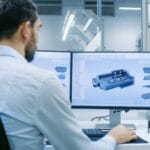
The single most effective way to reduce cost is to optimize the part before it ever reaches production.
Many parts are over-engineered, with unnecessary thickness, excessive material usage, or features that complicate tooling and cycle time.
Key design improvements:
- Reduce wall thickness where structurally possible
- Maintain uniform wall sections to prevent defects and rework
- Eliminate unnecessary features that require complex tooling
- Design for efficient mold filling and cooling
Even small reductions in part weight can lead to significant annual savings—especially on high-volume programs.
2. Choose the Right Material (Not Just the Cheapest)
Material selection is often misunderstood. The lowest-cost resin per pound is not always the lowest-cost solution overall.
Consider:
- Can a lower-cost resin meet performance requirements?
- Can regrind or recycled content be used safely?
- Is the material causing longer cycle times or processing challenges?
A material that processes faster or more consistently can reduce:
- Cycle time
- Scrap rates
- Machine downtime
All of which directly impact part cost.
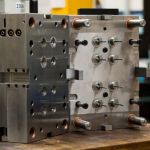
3. Design for Efficient Tooling
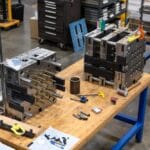
Tooling decisions have a major influence on both upfront cost and long-term piece price.
Opportunities to reduce cost:
- Simplify part geometry to avoid slides and lifters
- Evaluate aluminum tooling for low-volume or bridge programs
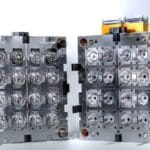
- Design multi-cavity tools where volume supports it
- Ensure proper cooling design to reduce cycle time
Well-designed tooling doesn’t just lower initial investment—it enables faster, more stable production over time.
4. Reduce Cycle Time
In injection molding, cycle time is cost.
Every second saved in the molding cycle directly reduces the cost per part.
Key drivers of cycle time:
- Wall thickness (thicker parts = longer cooling)
- Material selection
- Tool cooling efficiency
- Process optimization
Even a 2–3 second reduction in cycle time can result in substantial savings over the life of a program.
5. Minimize Secondary Operations
Secondary operations—such as trimming, assembly, painting, or machining—add labor, time, and variability.
Ways to eliminate or reduce them:
- Design parts for in-mold features (snap fits, living hinges)
- Incorporate cosmetic features directly into the mold
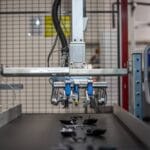
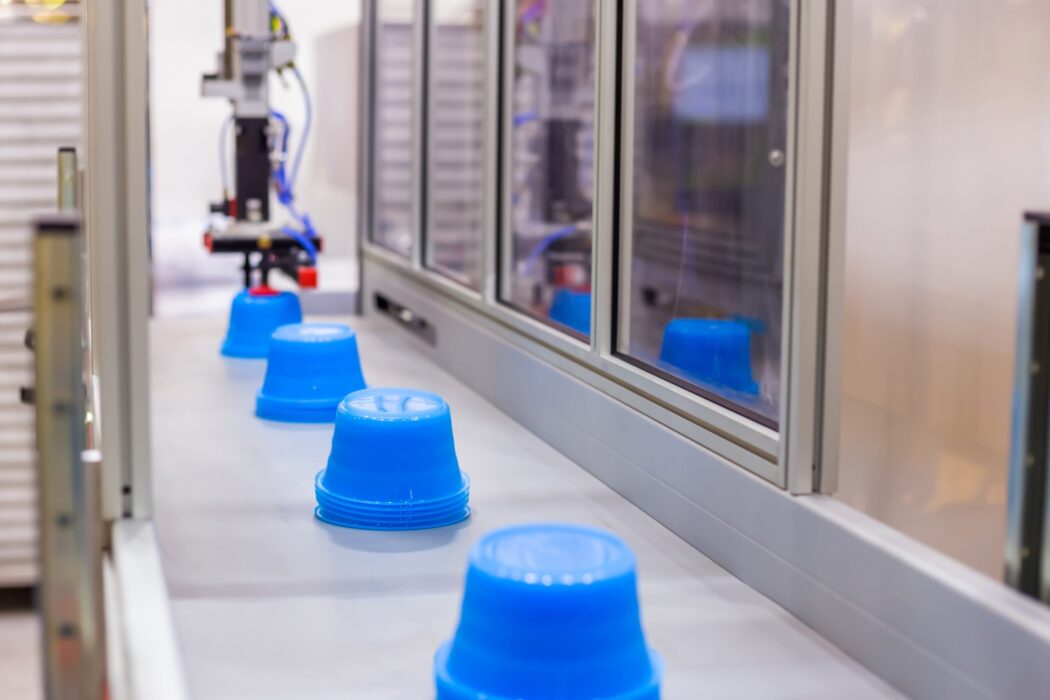
- Use automation where secondary steps are unavoidable
Reducing secondary operations not only lowers cost but also improves consistency and throughput.
6. Right-Size the Production Strategy
Not every part should be run the same way.
A mismatch between production strategy and demand can quietly increase costs.
Consider:
- Is the part being run in the right size press?
- Does volume justify automation or multi-cavity tooling?
- Would a high-mix, flexible manufacturing approach reduce inventory and waste?
Aligning production strategy with actual demand can unlock both cost savings and operational efficiency.
7. Partner With the Right Injection Molder
Finally, one of the most overlooked cost drivers is the choice of manufacturing partner.
A capable partner doesn’t just quote parts—they identify opportunities to improve them.
At Montrose Molders Corp, we focus on:
- Identifying cost reduction opportunities early in the quoting process
- Providing design-for-manufacturing (DFM) feedback
- Optimizing tooling and processes for long-term efficiency
- Supporting both high-volume production and low-volume, high-mix programs
The result is not just a lower piece price—but a more reliable, scalable supply chain.
Final Thoughts
Reducing injection molded part costs isn’t about cutting quality—it’s about making smarter decisions across design, materials, tooling, and production.
The companies that achieve the greatest savings take a proactive approach:
- They engage early
- They design with manufacturing in mind
- They partner with suppliers who bring ideas, not just capacity
If you’re evaluating ways to reduce cost in your current program—or launching a new one—there are almost always opportunities worth exploring.