
High Volume vs. Low Volume Injection Molding: Which One Is Right for Your Project?
In case you are planning to manufacture plastic parts, the first and most crucial decision you will have to make is whether you want to go for high volume or low volume injection molding. Although both methods are based on the same underlying process, they cater to very different requirements. Choosing one over the other will definitely decide not only the amount of time and money you will invest in the process but also the level of your frustration.
Here, we discuss the major differences between high volume and low volume injection molding so that you end up making a right and well-informed decision about your new project.
What Is High Volume Injection Molding?
High volume injection molding is aimed at mass production usually tens of thousands to millions of parts for a production run. If you are looking for reliable, reproducible parts produced in large volumes, and your product design is already completed, then this is the best option.
Key features of high volume molding:
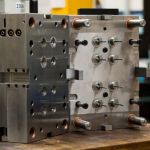
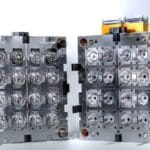
- Toughened steel molds are constructed of toughened steel for long life and high resistance to wear over millions of cycles.
- Cheaper cost per part since tooling expenditures are divided among a large number of units, the per-part price is drastically reduced.
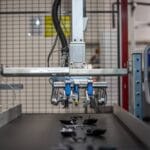
- Automation and productivity large scale productions are usually accompanied by robots and automated systems that ensure fast and uniform output.
- Very precise dimensions even in large quantities with state-of-the-art process controls, it is possible to produce parts that meet the specifications exactly, whether it is part number 1 or part number 500,000.
High volume injection molding is highly suitable for consumer products, automotive parts, packaging as well as any scenario where large numbers of same parts are continually required.
What Is Low Volume Injection Molding?
Low volume injection molding usually means making fewer than 10,000 parts in a single run. It is designed to be flexible – ideal for those companies that are still working on their product, market testing, or requiring very specific parts in low volumes.
Key features of low volume molding:
- Aluminum tooling Using aluminum molds at a much lower cost than steel ones results in drastically reduced tooling cost.
- Faster turnaround As aluminum molds can be done quicker, the part delivery time is also faster.
- Design flexibility It is very less expensive to alter or replace an aluminum tool than redoing a steel one if you have design changes.
- Lower upfront investment A lot less tooling cost allows low volume molding to be a reality for startups, small businesses, and niche product lines.
Low volume injection molding is an ideal solution for prototypes, pilot programs, market testing, custom or specialized products, and legacy parts that are still required though have no full production justification.
High Volume vs. Low Volume Injection Molding: Key Differences
Typical Run Size
- High Volume: 10,000+ parts per run
- Low Volume: Under 10,000 parts per run
Tooling Material
- High Volume: Hardened steel molds built for millions of cycles
- Low Volume: Aluminum molds suited for shorter production runs
Tooling Cost
- High Volume: Higher upfront investment
- Low Volume: Lower upfront investment, easier on budget
Cost Per Part
- High Volume: Lower cost per part due to economies of scale
- Low Volume: Higher cost per part, but offset by low tooling spend
Lead Time
- High Volume: Longer initial setup time before production begins
- Low Volume: Faster turnaround — parts in hand more quickly
Design Flexibility
- High Volume: Limited — design changes are costly once steel tooling is made
- Low Volume: High — aluminum molds are easy and affordable to modify
Best For
- High Volume: Mass production, consumer goods, automotive, and high-demand applications
- Low Volume: Prototypes, market testing, custom products, and specialty components
Which Option Should You Choose?
The correct decision really depends on which stage you are in your product lifecycle and what your manufacturing targets are.
Opt for high volume injection molding if:
- Your product design is almost done and you don’t foresee any major modifications.
- You require a large, consistent supply of parts.
- Lowering cost per unit is a major focus.
- You are manufacturing for the mass market or high-demand sectors.
Go for low volume injection molding if:
- Your product layout is still a work in progress or you are experimenting with different versions.
- You would like to obtain response from the market before going into very large scale production.
- Your product is mostly custom, niche or specialty oriented.
- You want the parts urgently and your funds for initial tooling are limited.
Sometimes, businesses run low volume production and then, after their product is validated and demand increases, go for high volume. A skilled molding partner is able to manage both the stages without any problems.
Partner With Montrose Molders for Both
At Montrose Molders Corp. we operate both high and low volume injection molding productions from our New Jersey facility certified to ISO 9001:2015. We have 51 injection molding machines with capabilities from 40 up to 1,000 tons of clamp force; we design and make tools ourselves and have over 50 years of industry knowledge. That means, we can meet your project needs at any level.
Our team will work with you to determine the most suitable method and provide you with the expected quality whether you are introducing a new product or producing at full scale.
Contact Montrose Molders today to request a proposal and get started.