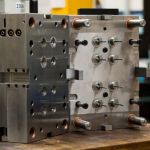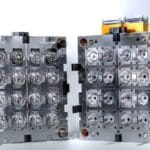

The discussion is primarily about cost of the part, cost of mold and delivery time when a firm has an injection molding project. However, there is a technical standard that underpins all those questions: SPI Mold Classifications. This set of classifications ranging from Class 101 to 105 was developed by the plastics industry and serves as a guide.
They specify exactly how a mold is going to be fabricated, what materials will be utilized, and most importantly how long it will last.
We at Montrose Molders Corp decide that selecting the appropriate mold class is the most significant financial decision you will be making in the manufacturing process. Here is what you should know so that you neither pay excessively for a tool you do not need nor construct a tool inadequately which would be unsuitable for long-term use.
What is an SPI Mold Classification?
The SPI (Society of the Plastics Industry) system classifies molds according to their durability and manufacturing quality. Imagine it as you are buying a vehicle: a Class 105 mold is just like a car that you rent for a weekend, whereas a Class 101 mold is a strong semi-truck that is capable of running a million miles.
The Quick Comparison Table
| SPI Class | Expected Tool Life | Typical Use |
| Class 101 | 1,000,000+ cycles | High-volume production |
| Class 102 | Up to 1,000,000 cycles | Medium-to-high volume |
| Class 103 | Up to 500,000 cycles | Medium volume |
| Class 104 | Up to 100,000 cycles | Low-volume production |
| Class 105 | Fewer than 500 cycles | Prototypes and testing |
Breaking down the Classes
Class 101: The “Gold Standard”
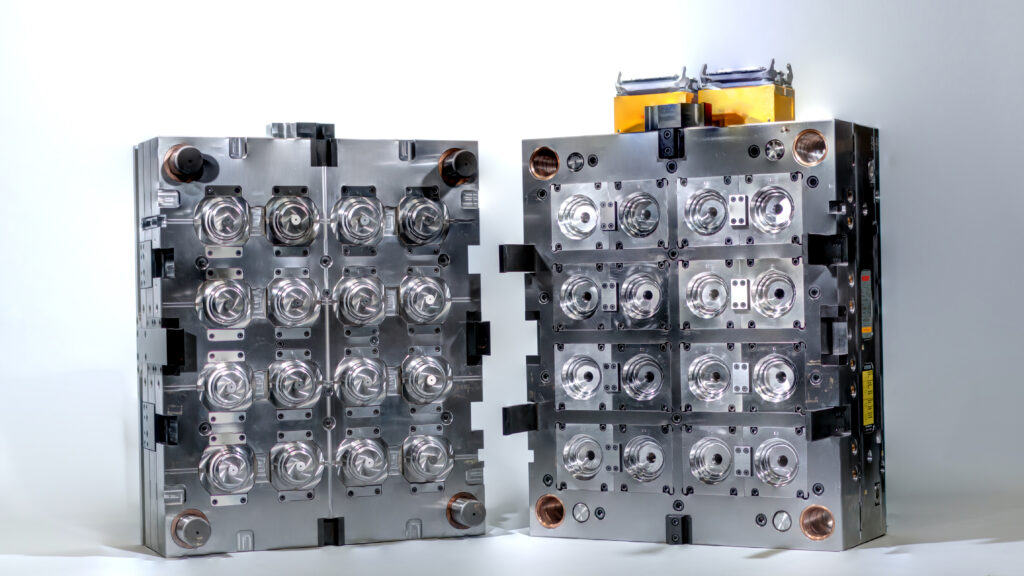
This represents the top-level mold quality. Comprising hardened tool steel with the incorporation of advanced cooling systems and high-precision components.
Ideal for: Parts that will be made in the millions for many years.
The Compromise: It comes with the highest initial cost and the longest production time, however it gives the lowest cost per part during the whole project duration.
Class 102: High-Volume Workhorse
Still very close to Class 101, but maybe a bit less “armored”. It continues to use high-quality steel and be capable of very accurate work.
Suitable for: Big projects where you require strength but maybe the part won’t be produced for a very long time.
Class 103: The Medium-Volume Middle Ground
This category could be considered the most frequent one. It is a well-rounded production capacity featuring top-notch materials. However, it definitely doesn’t stand up to the heavy 1-million-cycle usage scenario.
Best for: Most typical consumer or factory products with moderate sales volumes.
Class 104: Low-Volume or “Bridge” Tooling
Often these molds are made from softer steel or even very good quality aluminum. Their construction time and cost are much less than those of higher classes.
Best for: Limited production or “bridge” tooling (earning profits on parts from a cheap tool while the Class 101 tool is being made).
Class 105: The Prototype
This is a one-time tool. It is built as inexpensive and quickly as possible, usually soft aluminum or even unhardened metal.
Best for: Design verification. When you want to produce only 50 units for check if the concept works, this tool will serve you well.
How to Choose: The “Sweet Spot” Strategy
Working with the wrong class may be horrendous for your budget. We highlight here four major aspects we consider to offer our customers some guidance in their decision making:
- Total Volume: What is the number of parts required this year? Over the next five years? If the answer is “five million,” you definitely need a Class 101.
- Part Complexity: Very intricate parts with “slides” or “lifters” (the moving inside the mold parts) not only need stronger steel but also the design has to ensure that the mold remains operational.
- Material Choice: Some plastics are “abrasive” (such as those filled with glass fibers). These materials almost “chew” through soft molds, so a higher class is usually necessary even for low volumes.
- Product Life: Is it a hot item trending one year from now? Then, choose Class 104. Or, is it a car door handle that is expected to last 10 years? In this case, you have to go for Class 101.
The Danger of Ignoring the Specs
Lots of OEMs mistakenly select the cheapest offer without even checking the SPI class.
Underbuilding: For example, if you purchase a Class 104 mold but will try to produce through it a million parts, the mold will soon get to be warped, cracked, or the finish will dull. This will actually cost you more in repairs and downtime compared to what you would have initially paid for the “expensive” mold.
Overbuilding: Purchasing a million-cycle die for a product that is only going to be sold in 20,000 units is an unnecessary expense of capital which could instead have been allocated to marketing or R&D.
Final Thoughts
Montrose Molders Corp is not only a mold making company; it’s a company that makes manufacturing strategies. Having a good grasp of SPI classifications will allow you to get a perfect match between your tooling investment and your production goals.
Interested in beginning? Whether you don’t know which mold class suits your next project, contact us. We will assist you in balancing cost, durability, and speed to get your product to market effectively.