

In the high-stakes world of manufacturing, lead time is the ultimate currency. Whether you are unveiling a new product, replacing a supplier who failed to meet your expectations, or changing your strategy to satisfy a sudden increase in market demand, hardly any delay in plastic manufacturing can be kept from the rest of the supply chain. They affect create a chain of events that results in lost revenue, diminished customer trust, and increased inventory carrying costs.
Therefore, the most important question for any Original Equipment Manufacturer (OEM) is: What really controls injection molding lead times, and how can they be shortened?
At Montrose Molders Corp, our expertise is in assisting OEMs to effectively manage their lead times in order to be faster without compromising on quality. This manual thoroughly examines the factors influencing lead times and points out the main strategic actions that you can take in order to speed up your project.
Defining the Typical Injection Molding Timeline
We can only reduce lead time after we understand its components well. An injection molding project is typically divided into two major phases:-
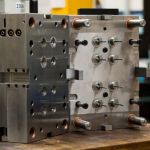
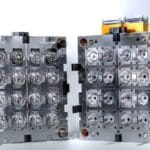
Tool making (Mold building)
- Normal time: 4 to 16+ weeks.
- Main factors: This is the most fluctuating part. It not only depends on the intricacy of the mold but also the physical size of the tool as well as the materials used (e. g. aluminum vs. hardened steel).
Production Startup
- Normal time: 1 to 4 weeks.
- Main factors: This refers to “T1” sampling (i. e. the first shots from the press), part validation, quality inspections and the final ramp-up to full-scale production.
In Summary: The majority of programs range within a 6 to 20+ week period from the design approval moment to full production day.
The Core Factors Impacting Lead Time
Timelines should not be seen as random; rather, they are influenced by specific engineering and logistical considerations.
- Tool Complexity
Each additional feature in a part requires the mold’s “negative” space to be more intricate. Straight-pull, single-action molds that are simple can be produced quickly. Parts that have undercuts or internal threads will require:
- Additional machining: Extra time working on CNC or EDM equipments.
- Mechanical components: the addition of slides, lifters, and cams.
- Extended validation: More moving parts usually translate to more chances for adjustment during the sampling phase.
- Part Design Quality
Delays pile up before any steel touches the machine. Tools get reworked over and over, pushing timelines past weeks. Thick walls twist during cooling, and missing draft angles jam the molds shut. That said, fixing problems later means more redesigns and extra labor down the line.
- The Result: This turns out, checking designs early – Mainly how they’ll move in production – stops messes from growing.
- The Solution: A good DFM scan catches flaws in the digital stage before tools even show up.
- Tooling Strategy: Aluminum vs. Steel
Choosing the right material for the mold is a balance of speed and longevity.
- Aluminum Molds: These are significantly faster to machine and dissipate heat quickly, which can also reduce cycle times. They are ideal for pilot programs or lower-volume runs.
- Steel Molds: While they take longer to build and heat-treat, they are necessary for high-volume production and tighter tolerances. Choosing the wrong strategy can either slow your initial launch or limit your ability to scale later.
- Material Selection
However, not all resins are equal often the higher performing engineering resins require a more extended “processing window” and therefore take longer to dial in the sampling phase. Also, specialty/custom-colored resins may have their own sourcing lead times that need to be factored in for the project start.
- Supplier Capability and Responsiveness
The “soft” aspects of manufacturing (communication skill comfort) are equally as important as the hardware. If you have an in-house engineer and customer-sensitive communicator, your partner can correct a design deficiency in hours a poor partner might take days or weeks to find and fix the defect.
Domestic vs. Overseas: The True Cost of Speed
Most OEMs are suckered by overseas tooling’s “lower” initial costs.
However, the “hidden” lead time costs may be much higher:
- Logistics: Bringing a multi-ton tool across the ocean takes weeks.
- Communication: Asking a simple question can become a 24 hour wait because of the various time zones.
- Rebuild Cycles: The time it takes to go to local shop or ship it back is a huge time hog if it requires a change after the first few samples are run.
Tolling domestically also allows for factor collaboration, quicker logistics and immediate troubleshooting; this can lead to the shorter impact on the overall timeline even if the initial quote is higher.
Production Lead Times: Beyond the Mold Build
When the tool is validated, the next step is to move to the production.
The production time is then depending on the production efficiency and on the time:
- Press Availability: Is the molder in the correct tonnage machine open when you require it?
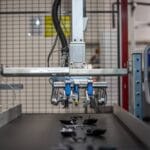
- Automation: Using robotics in part removal and packaging provides higher output and more reliable, predictable scheduling.
- Flexibility of schedules: A partner who can adapt to your changing needs is a huge advantage in a turbulent market.
Common (and Avoidable) Delays
Most project delays stem from a few recurring issues:
- Late-stage design changes after the tool build has started.
- Inadequate mold cooling design leading to long cycle times.
- Misalignment between the OEM’s quality expectations and the supplier’s output.
How to Engineer a Faster Timeline
A reduced time delay is a strategic plan change.
- Get Widespread Buy-in: Engage your molder early on, in the concept phase to help minimize the extensive DFM.
- Simplify: Every part you take away, is a part of the tool you don’t have to machine.
- Pick the right partner: Find a molder who moves fast and is responsive.
Then he is who will be able to rapidly work on the problem encountered and very quickly move on to the next step.
Final Thoughts
Lead time is an advantage. Hit your market windows by bringing an idea to a finished part faster than your competitor, and reacting to potential disruptions. When part design, tooling strategy, and supplier selection are aligned, the injection molding process can become a competitive advantage.
Prepared to speed up your program? We are. Call our engineering department and we will be happy to receive your design and find the quickest way to get it built.