
The transformation of the world to renewable energy, electric vehicles, and advanced industrial equipment is driving the rapid evolution of battery technology. High-performance plastic parts are the core of every battery system, be it for a vehicle, a computer, or a large power grid.
As battery systems handle very high energy levels, the plastic parts used to enclose and protect them are not ordinary items. They are safety-critical components that require very high precision. Montrose Molders Corp team are experts in dealing with the very specific challenges of battery manufacturing. Here is our list of information for engineers and procurement teams.
Why Injection Molding?
Precision in battery manufacturing isn’t merely a target; it’s a non-negotiable aspect necessitated by safety concerns. Injection molding has become the favorite production method in this sector due to several factors:
- Extreme Repeatability: It is of paramount importance that every component, even the 100,000th piece, is exactly the same as the first one.
- Complex Geometry: It is possible to make cell holders with very thin walls or to have extremely detailed internal cooling channels.
- Scalability: The larger the number of parts produced, the lower the cost per part.
Essential Battery Components
Plastic components in a battery system perform various functions that go way beyond merely holding things together. Here are some typical injection-molded parts:
- Housings and Enclosures: They form a protective barrier around the cells inside, shielding them from impact and environmental damage.
- Cell Spacers and Holders: They help to keep cells at a proper distance from each other, which not only prevents the cells from heating up too much but also helps maintain the overall strength of the assembly.
- Insulation Components: They make sure that no unwanted electrical connections occur by acting as a physical barrier between different electrical components while also ensuring safe running of the system.
- Thermal Management Parts: Panels and channels mainly used to direct air flow and release heat.
Choosing the Right Material: The “Safety First” Approach
Material selection plays a crucial role in battery applications. While on the surface you might be selecting a plastic, what you are actually deciding on is a thermal as well as an electrical barrier.
1. Flame Retardancy (UL 94 Standards)
When it comes to safety, no compromise is made. Most battery components require materials that are rated V-0, which means they can stop the fire on their own within seconds if they get ignited.
2. Thermal Resistance
Batteries heat up during charging and discharging. The plastic should be capable of maintaining its shape and functionality even when exposed to heat continuously, without any deformation or melting.
3. Electrical Insulation
The material should possess high dielectric strength. It has to be a flawless insulator so that electricity follows the intended path only.
- Common Materials
Usually, we rely on:
- Flame-retardant polycarbonate (PC): to achieve both impact resistance and clarity.
- Glass-filled nylon (PA): when strength and heat resistance are required at a higher level.
- Specialty engineered resins: for very harsh environmental conditions where chemical resistance is essential.
Design Challenges: More Than Meets the Eye
There is a big difference when it comes to designing a battery part versus a normal consumer product. The team at our end is concentrating on the following main points:
- Thermal management: Part design must enable adequate ventilation. Overly large parts can retain heat, which leads to a reduced lifespan of the battery.
- Wall thickness: A varying thickness leads to the problem of warping. In the case of a battery assembly where the parts must fit perfectly to avoid leaks or shorts, a minor warp would be considered a major failure.
- Vibration resistance: In the case of electric vehicles, battery parts often undergo shaking, so the design should be ribs and bosses to withstand mechanical stress over time are a must.
The Challenges of Tool Making
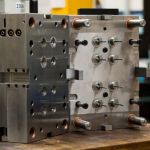
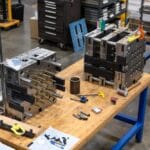
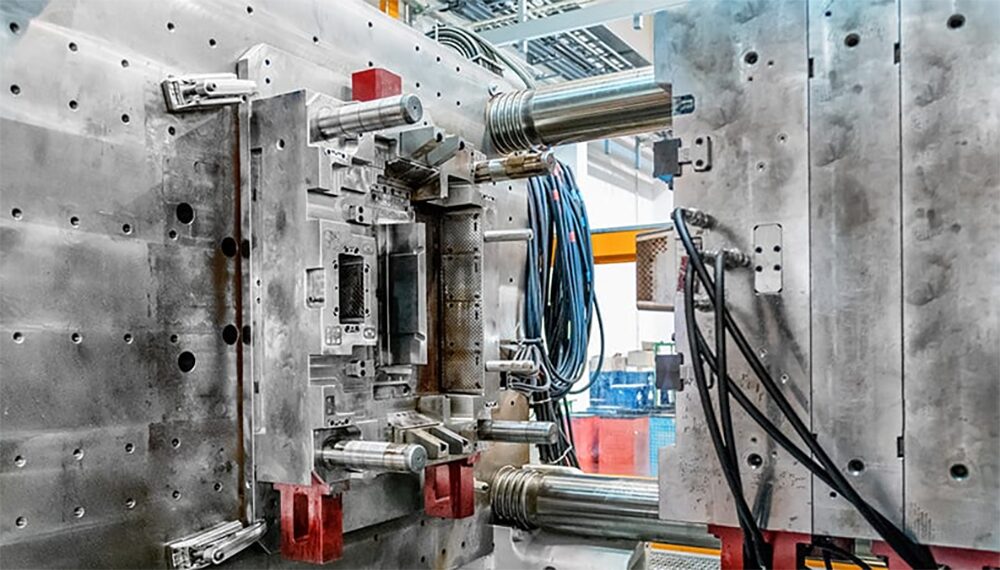
Because battery parts often require tight tolerances, the mold itself must be a masterpiece of engineering.
- Precision Tooling: Small errors in the mold lead to assembly problems later. We use high-grade steel and advanced machining to ensure the tool stays accurate over hundreds of thousands of cycles.
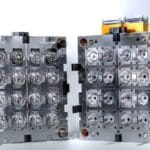
- Multi-Cavity Balance: To keep costs down, we often use molds that make multiple parts at once. Ensuring that every cavity fills with the exact same amount of plastic at the exact same pressure is a technical hurdle that requires expert engineering.
Navigating Manufacturing Obstacles
Despite a flawless design and a flawless tool, the manufacturing operation still has to be kept under a very strict control.
- Material Sensitivity: Flame-retardant additives are known to cause the plastic to behave in an “unpredictable” manner during melting and molding.
- Quality Consistency: Since these parts are safety-critical, we ensure a very low defect rate level by means of intensive process monitoring and thorough inspection.
Finding the Right Partner
Most injection molders never even get near battery work. But some actually know how to handle UL rules and design for manufacturability – which matters when one’re dealing with high-stakes safety issues.
At Montrose Molders Corp, we don’t just churn out plastic, and we choose resins that cut through stress points, fine-tune cooling paths in designs, and craft precise molds so the battery system doesn’t fail under pressure.
This turns out, a solid tooling plan can save weeks of trouble later. If one are building something electrical, we’ve got insight on material balance and structural needs to keep things stable and affordable without cutting corners.