
What Is an Injection Mold? A Complete Guide to Define Injection Moulding
If you have ever taken a plastic bottle cap, a TV remote, or a car dashboard panel in your hands, then you have also touched the output of injection molding. It is one of the manufacturing processes most frequently used worldwide. Yet, many people don’t even know what it is like. In this guide, injection molding will be clearly defined and the term molders explained in simple, easy-to-understand language.
Define Injection Molding
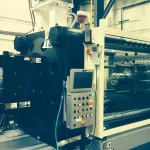
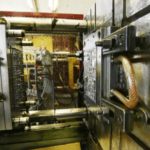
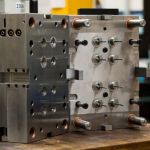
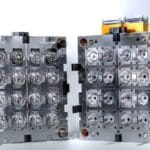
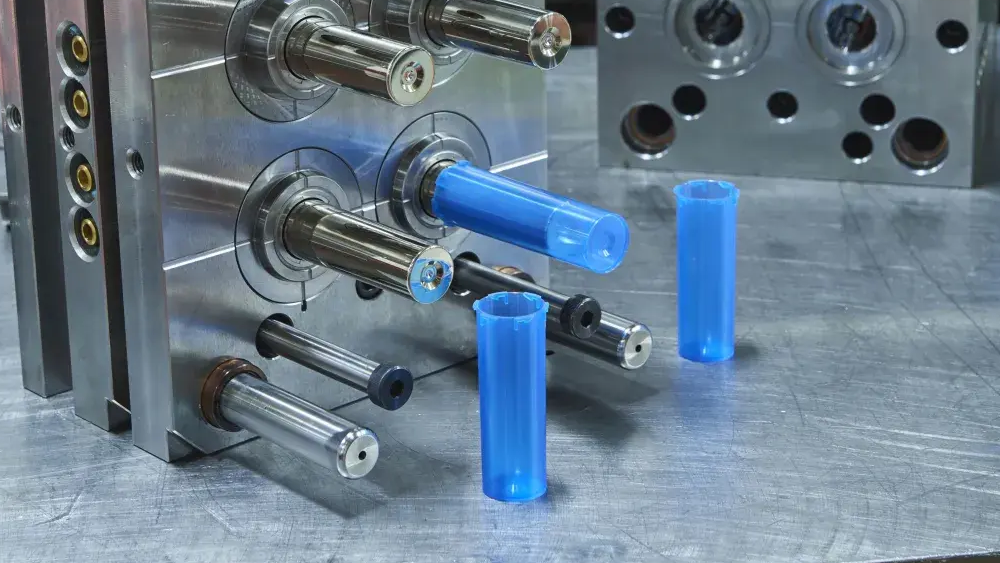
Production method of injection molding allows the creation of components by forcing the molten material (which is most often plastic) into a specially designed mold or cavity. After the material hardens and cools down inside the mold, it obtains the same shape as the cavity and is then removed from the mold as a final product.
A mass production method of injection molding is capable of churning out thousands of identical units in a short time, with efficiency and high level of accuracy. It has the capacity of producing even the most minute medical parts as well as large automotive body panels.
How Does It Work?
To start with, the fundamental steps of injection molding include:
- Material Feeding Plastic pellets or granules are put into a hopper.
- Melting: The pellets are heated in a barrel until they become a viscous liquid.
- Injection: The molten plastic is pumped under high pressure into a closed mold.
- Cooling: The plastic solidifies by cooling inside the mold cavity.
- Ejection: The mold is opened and the completed part is ejected.
- Repeat: The whole cycle is repeated for the next piece. This cycle can take from a few seconds to a few minutes only, which makes it perfect for large scale production.
Molders Definition
Now what is a molder? in simple terms, a molder (or molder) can be defined as a company or individual who is involved in the manufacture of parts using the injection molding process.
Molders manufacture parts by designing, constructing, and using molds.
- Custom Molders- Manufacture parts per a custom design and specification.
- Captive Molders- Make parts strictly for their company’s products.
- Contract Molders- Offers contract molding for several customers.
A professional molder like Montrose Molders, would have the experience in finding the right tool design material quality control, and production efficiency to guarantee every part meets specification.
Why Is Injection Molding So Popular?
Injection molding has become the first choice in plastic manufacturing for many reasons:
- High Productivity- post mold fabrication, the parts can be quickly manufactured.
- Repeatability- almost identical parts emerge each time, thereby ensuring quality consistency.
- Minimal Waste- the surplus material is often recyclable and reusable.
- Good Design Flexibility- quite complicated shapes and tiny details can be done very accurately.
- Economical at Large Scale- as production volume increases, the cost for each item decreases.
Common Materials Used in Injection Molding
Injection molding works with a wide variety of materials, including:
- Polypropylene (PP)
- Acrylonitrile Butadiene Styrene (ABS)
- Polyethylene (PE)
- Nylon
- Polycarbonate (PC)
- Thermoplastic Elastomers (TPE)
The right material depends on the intended use, required strength, flexibility, and environmental conditions the part will face.
Frequently Asked Questions (FAQs)
Q1. What is injection molding used for?
Basically, injection molding is a method used in the production of a huge variety of plastic objects. Think of automobile components, medical equipment, household essentials packaging playthings, and electronic device housings, to name just a few.
Q2. What is the difference between injection molding and injection moulding?
They have no difference at all technically “molding” is the spelling preferred in American English, while “molding” is the British English and other countries usage. Both denote the very same manufacturing process.
Q3. How long does an injection mold last?
If it’s a good one, Yes capable of doing 100,000 to a whopping 1 million cycles and even beyond, based on the mold material (like steel or aluminum) and the plastic being made.
Q4. Is injection molding expensive?
The initial expenditure for making the mold, also referred to as “tooling,” can be quite high. Yet, the price per unit drastically reduces as the number of produced units goes up, thereby making it highly economical for mass production.
Q5. What industries use injection molding?
Injection molding is used in almost all major industries like automotive healthcare consumer goods aerospace food and beverage packaging, construction, and electronics.
Q6. Can injection molding produce complex shapes?
Definitely. The biggest benefit of injection molding is its capability to produce highly detailed, complex designs with very accurate dimensions which would be challenging or even impossible to make using other methods.
Final Thoughts
Knowing what injection molding is will enable you to keep in mind that the process is going to be critical to the manufacturing that we do in modern times. Even if the only reason that you want to know is that you are brainstorming ideas for your production line. And you will need to have a great method for production. You can just be interested in finding out how the products that we see around us are made. Injection molding will be able to give you high level of accuracy, quickness, and the ability to produce on a large scale that hardly any other methods can really match.