
A Practical Resource for Engineers, Procurement Teams, and OEMs
Plastic injection molding is one of the most widely used manufacturing processes in the world—and for good reason. It enables the production of complex, high-quality plastic components at scale with exceptional repeatability.
Whether you’re designing a new product, sourcing a manufacturing partner, or looking to reduce costs in an existing program, understanding how injection molding works—and how to optimize it—can have a major impact on your results.
At Montrose Molders Corp, we’ve spent decades helping OEMs navigate this process. This guide brings together the key concepts every engineer, procurement manager, and supply chain leader should understand.
What Is Injection Molding?
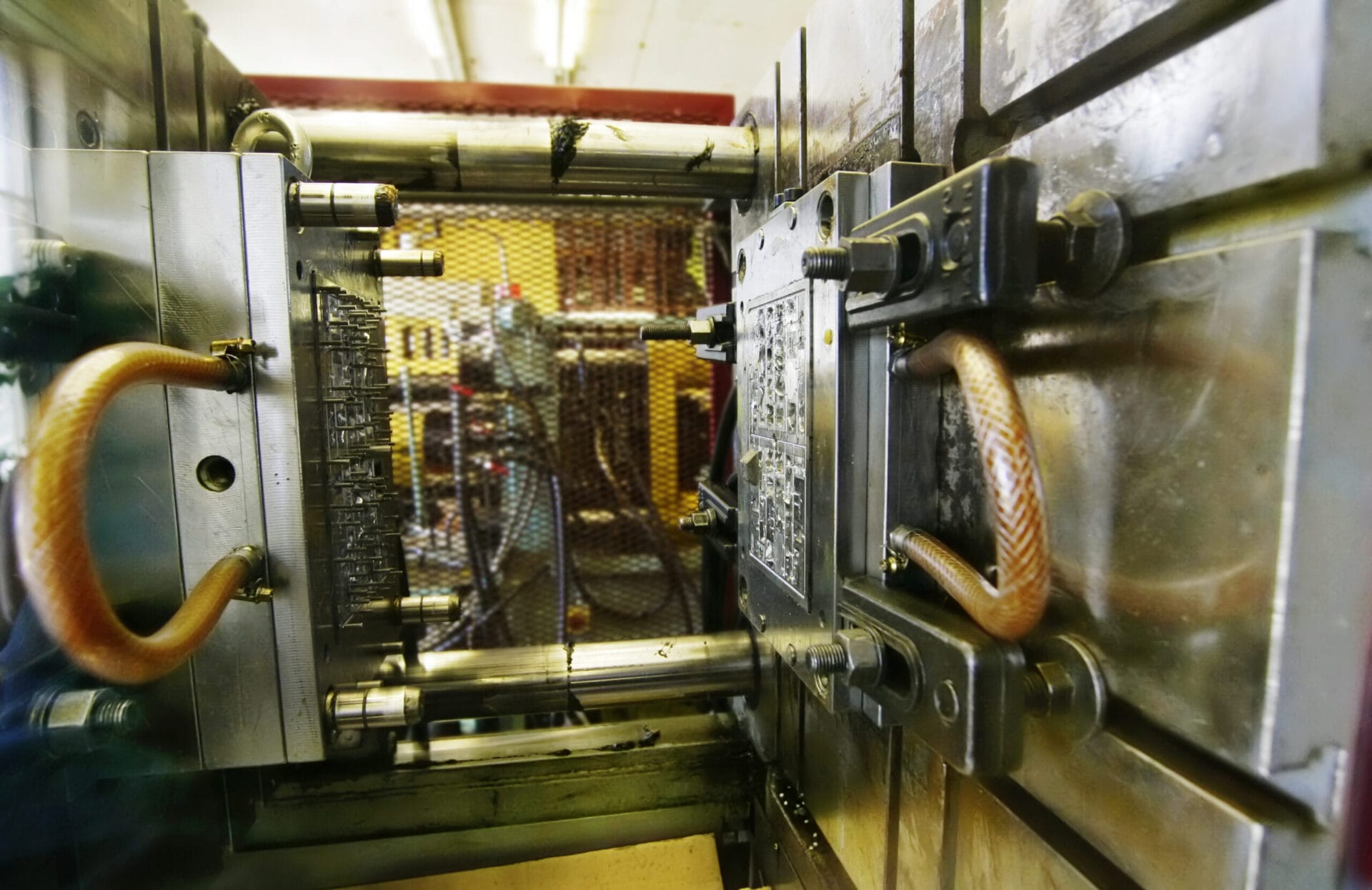
Injection molding is a manufacturing process where molten plastic is injected into a mold cavity, cooled, and solidified into a finished part.
The basic process:
- Plastic resin is heated until molten
- The material is injected into a mold under pressure
- The part cools and solidifies
- The mold opens and the part is ejected
This process is ideal for producing:
- High-volume components
- Complex geometries
- Tight-tolerance parts
- Repeatable, consistent products
Injection molding is used across industries including:
- Industrial equipment
- Battery systems
- Appliances
- Consumer products
- Medical devices
Design Rules for Injection Molding
Good design is the foundation of cost-effective and high-quality parts. Poor design decisions can lead to defects, high tooling costs, and inefficient production.
Key Design Principles
1. Uniform Wall Thickness
- Prevents warping and sink marks
- Improves material flow
- Reduces cycle time
2. Draft Angles
- Allows parts to eject cleanly from the mold
- Reduces wear on tooling
- Recommended: 1–2° minimum draft
3. Ribs and Bosses
- Add strength without increasing wall thickness
- Should be designed to avoid sink and stress concentrations
4. Fillets and Radii
- Improve material flow
- Reduce stress points
5. Gate Location
- Impacts appearance, strength, and flow
- Must be strategically placed for optimal filling
Designing with these principles in mind can significantly reduce both piece price and tooling complexity.
Injection Molding Tooling: The Foundation of Production
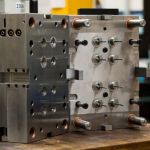
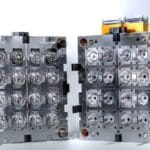
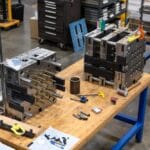
The mold (or tool) is the most critical component in the injection molding process. It determines part quality, cycle time, and long-term production efficiency.
Types of Tooling
Steel Tooling
- Long lifespan
- Ideal for high-volume production
- Higher upfront cost
Aluminum Tooling
- Faster to produce
- Lower cost
- Ideal for low-volume, bridge, or pilot programs
Key Tooling Considerations
- Cooling system design (impacts cycle time)
- Number of cavities (affects output and cost)
- Tool complexity (slides, lifters, etc.)
- Maintenance and longevity
Well-designed tooling is essential for achieving consistent quality and predictable costs over time.
Materials Used in Injection Molding
Material selection directly impacts performance, cost, and manufacturability.
Common Thermoplastics
- ABS – Strong, impact-resistant, widely used
- Polycarbonate (PC) – High strength and clarity
- Nylon (PA) – Excellent mechanical properties
- Polypropylene (PP) – Lightweight and cost-effective
- Polyethylene (PE) – Flexible and durable
Key Material Considerations
- Mechanical strength requirements
- Temperature resistance
- Chemical exposure
- Cost and availability
- Processing characteristics
Selecting the right material is a balance between performance requirements and total cost of production.
Understanding Injection Molding Costs
Injection molding costs are driven by several key factors. Understanding these drivers helps identify opportunities for cost reduction.
Main Cost Components
1. Tooling Cost
- One-time investment
- Driven by complexity, size, and material
2. Material Cost
- Based on resin type and part weight
3. Cycle Time
- One of the biggest cost drivers
- Shorter cycles = lower cost per part
4. Labor and Automation
- Automation reduces labor costs and variability
5. Secondary Operations
- Assembly, trimming, and finishing add cost
How to Reduce Costs
- Optimize part design
- Reduce material usage
- Improve cycle time
- Eliminate secondary operations
- Choose the right manufacturing partner
Cost reduction in injection molding is achieved through engineering decisions—not shortcuts.
Common Injection Molding Defects (and How to Avoid Them)
Even well-designed parts can experience defects if the process is not properly optimized.
Common Defects
Sink Marks
- Caused by thick sections or poor cooling
- Solution: uniform wall thickness, proper packing
Warpage
- Result of uneven cooling or stress
- Solution: balanced design and process control
Short Shots
- Incomplete filling of the mold
- Solution: adjust flow, temperature, or gating
Flash
- Excess material escaping the mold
- Solution: proper clamping force and tool maintenance
Burn Marks
- Trapped air or excessive heat
- Solution: improve venting and reduce shear
Understanding these defects—and how to prevent them—ensures consistent quality and reduced scrap rates.
How to Choose the Right Injection Molding Partner
Selecting the right partner is one of the most important decisions in any program.
What to Look For
1. Engineering Support
A strong partner provides design-for-manufacturing (DFM) input early in the process.
2. Range of Capabilities
- Wide press range (e.g., 40–1000 tons)
- Ability to handle both high-volume and high-mix programs
3. Responsiveness
Speed matters—especially when timelines are tight.
4. Experience
A proven track record reduces risk and improves outcomes.
5. Supply Chain Reliability
Domestic manufacturing can reduce lead times and supply chain disruptions.
At Montrose Molders Corp, we partner with OEMs to deliver not just parts—but predictable, scalable manufacturing solutions.
Final Thoughts
Plastic injection molding is a powerful manufacturing process—but success depends on how well each element is executed:
- Thoughtful part design
- Smart material selection
- Efficient tooling
- Optimized production
- The right manufacturing partner
When these elements come together, the result is high-quality parts, competitive costs, and a reliable supply chain.