
To many Original Equipment Manufacturers (OEMs), the decision to manufacture a plastic component starts with a seemingly straightforward question: “Could you provide a price for this part?”
But a professional injection molding quote is actually a figurative tapestry of features that together reveal the overall character of the piece and the economic impact of the project. These elements not only affect the price on the surface but also represent the possibility of the operation going on for a long time and being successful.
At Montrose Molders Corp, we think the quoting is not just some ‘black box’ where you don’t understand anything, but a transparent step by step plan. By learning injection molding pricing, you will be able to make best decision on sourcing, prevent ‘sticker shock’ at the end when you realize the price, and identify key areas where cost can be reduced.
The Two Pillars of an Injection Molding Quote
Most comprehensive quotes are divided into two major financial segments. Telling which is which is very important when you are figuring your Total Cost of Ownership (TCO).
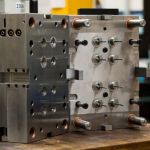
- Injection Mold tooling costs require one upfront payment to design the hardware. Actually, manufacturing takes time.
- Running machines means paying a recurring piece price for every single unit created. Costs accumulate steadily. That is reality. It is what it is.
Usually the interplay of these two is reverse: a pricey, top-of-the-line mold (high upfront cost) will most of the time lead to a notably lower piece price (low ongoing cost).
- Injection Mold Cost: Drivers of Tooling Price
The price of a mold can be anywhere from a couple thousand dollars to over six figures.
These are the main factors that influence the cost:
Size and Complexity of the Part
Larger parts need more raw material (steel or aluminum) and machining time. Also, complex shapeslike undercuts or internal threadsneed “slides” or “lifters. ” These components in the mold raise the engineering time and the complexity of the construction.
Tool Material: Aluminum vs. Steel
- Aluminum Tooling: Typically provides a cheaper upfront cost and shorter lead times. It suits well for prototyping or low-to-medium volume production.
- Steel Tooling: More significant initial expense but delivers a much more extended lifecycle. For high-volume runs and abrasive resins, hardened steel is required.
Cavitation
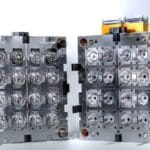
A single-cavity mold only makes one part per cycle, so the tooling costs stay low. On the other hand, a multi-cavity mold (making 2, 4, or even 64 parts at the same time) allows a significant reduction in the per-part labor and machine time costs, even if the mold is more expensive to build.
Surface Finish and Tolerances
If your part demands a bright, high-gloss “Class A” finish or “medical-grade” tolerances, the mold will need accurate machining and manual polishing, which increase the tool-making time and cost.
- Determining the Piece Price
After the mold is finished, the next thing to consider is the cost of production. This depends on various operational issues:
Material Cost
It depends on the type of resin and the final weight of the part. Generally plastics, like Polypropylene, are cheaper, while engineering-grade resins, like PEEK or Ultem, are more expensive but offer better performance.
Cycle Time
In injection molding, it is like money. Cycle time means the total time taken to close the mold, inject plastic, let the part cool, and eject it.
- Faster cycles = Lower cost.
- Slower cycles = Higher cost.
Cycle time can be improved through intelligent part design and efficient cooling channels inside the mold.
Labor and Automation
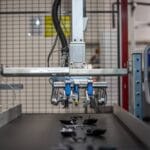
If trimming or packaging are done manually, there is an increase in labor cost. On the other hand, buying robotic automation can make the output more uniform and reduce the price of the piece over high-volume runs.
Secondary Operations
Does the part have to be painted, silk-screened, or assembled with other components? These post-processing steps add complexity and cost to the final quote.
Why Quotes Vary Between Suppliers
Usually, an OEM might get three very different quotes in terms of price for the same part. This is because they have different philosophies:
- The Low Quote: May possibly be based on quite optimistic cycle times, may even propose a tool made from lower quality tool steel or leave out the necessary secondary operations resulting in “add-ons” later.
- The High Quote: Usually takes into account a stronger, “over-engineered” tool meant to last for millions of cycles, employing the best materials, and covering risk mitigation and quality insurance.
Strategies to Reduce Costs during Quoting
The quoting stage is the most effective time to save money. Once the steel is cut, changes become expensive.
| Strategy | Action Item |
| Optimize Design | Reduce wall thickness to save material and speed up cooling. |
| Simplify Geometry | Eliminate undercuts to avoid the need for expensive mold slides. |
| Material Selection | Don’t over-specify; if a commodity resin meets the spec, don’t use an engineering grade. |
| Align Tooling | Use aluminum for 10,000 parts; invest in steel for 1,000,000 parts. |
The Importance of Transparency
At Montrose Molders Corp, our principle is “No Surprises” manufacturing. A comprehensive estimate must clearly specify all material, cycle time, and tool life assumptions. Coordinating our tooling and manufacturing plan with your respective business objectives is how we guarantee a seamless progression from the first sketch to the final product.
Final Thoughts
Quoting is not merely a price exercise but more so a strategic consultation. Each and every decision made in the quoting process – from the number of cavities to the type of resin selected – will have a lasting impact on the life of your product.
If you are thinking of embarking on your next project, contact the Montrose Molders team without delay. We are available to guide you through “new design evaluation” and “existing program optimization. ” We provide expert advice and consulting in plastics manufacturing to help you succeed.