

Plastic component designers and engineers usually get caught up primarily by plastic part geometry, material science and fundamental manufacturability, the most overlooked aspect of plastic part design for reducing cost and enhancing performance is assembly method. Design for Assembly (DFA), usually combined with Design for Manufacturability (DFM) to constitute the comprehensive practice of DFMA, is a fundamental aspect of today’s injection molding.
By making the assembly process easier, decreasing the number of parts and getting rid of extra secondary operations, a manufacturer can get a more efficient and cheaper production cycle. Montrose Molders Corp is one of those companies that makes early OEM collaboration a top priority in order to optimize designs when the potential for savings is at its highest.
What Is Design for Assembly (DFA)?
DFA is the intelligent decision-making process of creating new or modifying existing products in such a way that assembly becomes the easiest part of the entire process. The idea behind it is that parts should be able to be put together:
- In a way that is simple and natural, so it can be done easily.
- Fast enough that the entire production time is reduced.
- Having very few parts to make the whole system less complex.
- At lower cost by lessening both the efforts and the materials.
When we talk about plastic manufacturing, DFA can be a very powerful tool since minor design changes may even remove the need of some stages in the production line.
Why DFMA Matters in Plastics Manufacturing
Assembly costs frequently make up the biggest chunk of total product cost. Therefore, companies that overlook assembly during the design fase end up with a chain of problems, such as, among others, higher labor costs, decrease of production speed, increased defect rates, and the necessity to use specialized (and expensive) assembly fixtures.
On the other hand, an accurately planned DFMA approach yields a number of benefits:
- Reduced Part Count: Decreasing number of items in the supply chain.
- Getting rid of secondary operations: Saying goodbye to trimming, bonding, or machining.
- Increasing consistency: A straightforward assembly reduces human errors.
- Reducing Total Cost of Ownership: Savings achieved throughout the product lifecycle.
Sometimes, the biggest injection molding cost reductions don’t actually come from the molding itself the savings come from how the parts fit together after the molding.
Snap Fits vs. Fasteners: Choosing the Right Connection
One of the most important decisions in DFMA that really impacts the results is deciding how components will be joined.
Snap Fits (The Preferred Method)
Snap fits, which are molded-in features, let parts “click” into position.
- Advantages: Using these means you won’t need any extra hardware, and you can put them together at a really fast rate. Besides that, you won’t have to worry about screws dropping down inside the mechanism due to looseness.
- Points to think about: In order to have correctly functioning snap fits, you need to pick a suitable material very carefully. The plastic should be flexible enough, but also be able to resist fatigue. Moreover, the shape of the piece has to be perfectly accurate so that there are no cracks caused by stress during operation.
Fasteners (The Necessary Alternative)
In high-volume molding, screws and bolts don’t cut it – turns out they’re slower and messier than expected.
Every bolt adds to parts inventory, takes longer to put together, and can shake loose under regular motion.
For products needing strong holds or easy take-down later, they still make sense at least in theory. But when One can design a piece so the parts snap together without any fasteners, that’s how things really work. The key is shifting toward built-in connections instead of relying on separate hardware.
The Core of DFMA: Reducing Part Count
Each extra part in a product is a potential downside in manufacturing. The increase in parts not only requires additional tooling, inventory, and assembly time but also raises the number of possible failure points. Thus, to reduce the part count, designers could:
- Consolidate: Turn several parts into one complex molded piece.
- Integrate: Include functional features (e. g. springs or hinges) in the part design itself.
- Simplify: Remove extra structures that are not related to the main function of a part.
Eliminating Secondary Operations
But what if the real cost isn’t seen until after assembly? Hidden behind every polished part lies manual trimming, glue runs, ultrasonic welds, and extra machining. Designing features straight into the mold – press fits over glued joints – and letting parts pop out cleanly cuts down on deburring work. Cycle times grow steadier, profits hold tighter mostly.
Designing for Automation
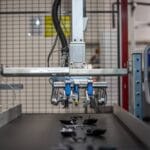
High-volume programs often resort to robotics instead of human assembly. Even if you are not planning to automate your process today, making your design compatible for it will offer you scalability in the future.
- Orientation: Make sure that parts have features which will help a machine in easily recognizing their correct position.
- Handling: Try to steer clear of delicate features that could get broken during robotic handling.
- Engagement: It is good to have parts with distinct “pick points” and lead-in chamfers to facilitate simple alignment.
Common DFMA Mistakes to Avoid
- Over-complication: Using five parts when two would have been enough.
- Late-Stage Thinking: Not considering assembly until the mold is already made.
- Fastener Over-reliance: Relying on screws as the “go-to” solution instead of naturally engineering a snap fit.
- Manual Adjustments: Creating parts which need a person to manually “fine-tune” or force them into position.
The Impact on Tooling and Mold Design
It is important to note that DFMA involves a trade-off. While simplifying an assembly might save money on the factory floor, it may require a more complex, multi-action injection mold. The goal is to find the “sweet spot” where the slightly higher cost of a sophisticated mold is vastly outweighed by the long-term savings in assembly labor and part reduction.
How to Get DFMA Right
Success in DFMA really boils down to teamwork. The most effective way is to invite your injection molding partner to join you right at the start of your design phase. Together, you can look at the molding and assembly processes, set the design for simplicity, and make design decisions that correspond well with the planned production volume.
At Montrose Molders Corp, our activity isn’t limited to executing molds; we pick out chances for you to enhance your design even before the tools are made. Due to the fierce competition, the decision to optimize through DFMA for cost, speed, and reliability should not be solely an engineering oneit should also be the one that you as a business make ensuring that your product is ready to scale.